Starting your business as an immigrant presents a path filled with challenges, but also rich with rewards. The journey to entrepreneurial success is unique, with its own set of obstacles, yet your resilience and ingenuity equip you to conquer them. This guide from English Online Training is crafted to provide you with practical advice for navigating the business world. It aims to help you turn your vision into a successful, flourishing enterprise.
Simplifying Contractual Processes
The task of drafting and managing contracts can seem daunting. However, there are online tools that let you fill out and sign PDF contracts with ease, streamlining this process significantly. These tools facilitate a more efficient management of legal documents, enabling you to focus on core business activities. By leveraging these digital solutions, you can handle contracts confidently, ensuring clarity and precision in your business dealings. For instance, this tool allows for adding an e-signature for online forms, facilitating better communication while also making it easier to keep your records updated and digitally preserved.
Market Research Mastery
Understanding your market is key to business success. Conducting thorough market research helps you grasp consumer preferences and demands, tailoring your offerings to meet their needs. This knowledge empowers you to make informed decisions, positioning your products or services effectively within the marketplace. Grasping the nuances of your target audience is essential in creating a sustainable and profitable business model.
Establishing Trust and Credibility
For immigrant entrepreneurs, building credibility is a vital step towards long-term success. Establishing trust with customers, suppliers, and partners requires consistent effort and integrity. By delivering quality products and services, engaging transparently, and honoring commitments, you create a reputation of reliability. This trust is the foundation for lasting business relationships and growth.
Leveraging Local Support Networks
Don’t overlook the power of local support services and business networks. These platforms provide access to resources, mentorship, and networking opportunities, crucial for your business growth. Engaging with these communities offers insights into local market dynamics and connects you with other entrepreneurs, potentially leading to collaborations and partnerships that can propel your business forward.
Digital Marketing for Wider Reach
In today’s digital age, effective online marketing strategies are indispensable. As an immigrant entrepreneur, harnessing digital marketing tools can significantly expand your reach and enhance your online visibility. From social media marketing to search engine optimization, these strategies help you connect with a broader audience, driving traffic and increasing engagement with your brand.
Learning from Setbacks
In your entrepreneurial journey, setbacks are inevitable. Rather than seeing failures as defeats, consider them valuable lessons for learning and growth. When you embrace these experiences, they contribute to developing your resilience, adaptability, and wisdom. Each challenge you face serves as a crucial stepping stone, enhancing your skills and guiding you toward greater success.
Legal Navigation and Compliance
As an immigrant entrepreneur, it’s imperative to understand the legal intricacies of your new business environment. Consulting with a business attorney equips you with crucial insights on staying compliant and managing risks effectively. They can help you decipher complex regulations, ensuring your business operates within legal boundaries, thus safeguarding your venture from potential legal pitfalls.
As an immigrant entrepreneur, your potential for success is significant, even in the face of numerous challenges. Adopting strategies like embracing digital marketing, and simplifying contracts is key to turning your entrepreneurial aspirations into a prosperous business. Your journey encompasses more than just surmounting hurdles; it’s about creating a lasting legacy of success and innovation. This path leads not only to personal achievement but also to making a meaningful impact in the world of business.
As you embark on your entrepreneurial journey in a new country, you’ll encounter a mix of exhilaration and hurdles. Your unique position as an immigrant equips you to transform your aspirations into reality.
This guide, courtesy of English Online Training, provides you with crucial tips to serve as your compass as you navigate the complex landscape. It aims to lead you toward achieving prosperity as a business owner in an unfamiliar setting.
Master Legal and Regulatory Landscapes
In the realm of entrepreneurship, legal and regulatory knowledge is power. Dive deep into the local laws concerning business operations.
You must familiarize yourself with necessary permits, licenses, and tax obligations, ensuring your business complies with immigration-related requirements. This understanding not only safeguards you from legal pitfalls but also fortifies the legitimacy of your venture.
Streamline Document Handling
In the digital age, efficient document management is a cornerstone of successful business operations. You can convert a PDF and other document formats to maintain a streamlined, organized system.
This approach ensures all crucial documents, from employment contracts to regulatory paperwork, are readily accessible and up-to-date. Embrace technology to keep your business documentation in check, ensuring quick retrieval and ease of management.
Cultivate Cultural Insight for Business Growth
Understanding the cultural fabric of your new business environment is invaluable. Delving into local customs, communication styles, and business etiquettes is essential.
This cultural acumen helps in building robust relationships with clients, partners, and employees. Resonating with the local culture paves the way for a more integrated, accepted, and successful business.
Choose the Optimal Business Structure
Deciding on the correct business entity is crucial. The benefits of forming an LLC include limited liability, tax advantages, less paperwork, and flexibility.
You can avoid hefty lawyer fees by filing yourself or using a formation service. Your business structure impacts your financial protection, tax obligations, and operational fluidity, so choose wisely to set a solid foundation for your business.
Enhance Communication Skills
Effective communication is crucial for networking and customer interactions. As an immigrant entrepreneur, refining your language skills is not just about fluency but also about understanding nuances and colloquialisms that aid in forging stronger connections.
Enhanced communication skills open doors to new opportunities, fostering trust and rapport in your business dealings. Connect with resources like English Online Training to take your English speaking skills to the next level!
Expand Your Network
Networking is the lifeline of entrepreneurial success. Engage in industry events, business meetups, and networking sessions. These interactions are invaluable for gaining insights, seeking advice, and opening doors to new opportunities. A strong network is a source of support, resources, and potential partnerships — all of which are vital for business growth and sustainability.
Embrace Adaptability
Flexibility in business is a sign of strength, not weakness. Your ability to adapt your business model in response to market feedback and dynamics is key to long-term success.
This adaptability ensures you remain relevant and competitive, even as markets evolve. Keep in mind the most successful businesses are those that can pivot and grow with changing times.
Focus on Customer-Centricity
Customer satisfaction is pivotal for building a robust business reputation; more specifically, delivering exceptional products and services is key. Responsiveness to customer feedback is essential in fostering a customer-centric culture. Such an approach guarantees customer loyalty and positive referrals, crucial for the enduring success of your enterprise.
Final Thoughts
Launching a business as an immigrant is a journey filled with unique challenges and rewarding opportunities. By embracing these strategies, you position yourself to overcome obstacles and capitalize on opportunities.
Your entrepreneurial venture has the potential to thrive and contribute positively to the community you now call home. Remember that success in business — especially in a new land — is a testament to your resilience, adaptability, and commitment to excellence.
Have you embarked on an entrepreneurial journey in a new country? What strategies do you find most valuable for overcoming challenges and capitalizing on opportunities as an immigrant business owner? Share your insights with us!
In today’s fast-paced world, capturing and keeping your audience’s attention is a formidable challenge. The era of monotonous slide decks and lectures is fading, making way for innovative and interactive approaches to communication. Whether you’re an educator, professional, or simply someone looking to engage your audience in a more captivating manner, it’s time to embrace the power of alternative oral project formats.
In this article, we dive into a diverse range of creative alternatives to traditional presentations. From lively panel discussions and debates that stimulate critical thinking, to immersive storytelling experiences and interactive workshops, we’ll explore the exciting possibilities that can revolutionize the way you convey information and connect with your audience.
Join us as we break free from the shackles of the typical corporate boardroom or classroom setup. Discover how podcasts, role-playing, guided tours, and even mystery-solving games can transform your content delivery into an engaging, memorable, and dynamic experience. These alternative formats not only captivate your audience’s attention but also foster deeper understanding and active participation.
Say goodbye to dull presentations and hello to an array of vibrant options that invigorate, inspire, and leave a lasting impression. Let’s explore the untapped potential of these innovative oral project formats, and unleash the true power of effective communication.
So, are you ready to embark on this thrilling journey with us? Let’s delve into the world of alternative oral project formats and revolutionize the way we present information!
Interviews or Panel Discussions: Conducting interviews with experts, community members, or peers on a specific topic. You can also organize a panel discussion with multiple participants to explore different perspectives.
Debates: Organize a structured debate where participants argue for or against a particular issue or topic. This can be an engaging way to present information and stimulate critical thinking.
Podcasts: Create an audio recording or podcast episode where you discuss a subject, share stories, and incorporate interviews or discussions.
Storytelling: Share a personal or fictional story orally. This can be a great way to engage your audience and convey a message through narrative.
Demonstrations or How-To Guides: Show and explain a process, skill, or DIY project to your audience. This can be interactive and hands-on.
Speeches or Monologues: Deliver a persuasive speech, informative talk, or dramatic monologue to convey your ideas, beliefs, or emotions.
Role-Playing: Act out a scenario or role-play to demonstrate a concept or address an issue. This can be particularly effective for interpersonal or communication-related topics.
Public Service Announcements (PSAs): Create a short video or audio message aimed at raising awareness about a social issue or promoting a cause.
Audio Essays: Compose an audio essay or commentary where you explore a topic or issue through spoken words, incorporating sound effects or music to enhance the experience.
Storytelling through Visuals: Tell a story using visual aids like photographs, artwork, or a series of images while narrating the plot and its significance.
Guided Tours: Conduct a virtual or in-person guided tour of a place, museum, historical site, or even a virtual environment, providing information and context as you go along.
Interactive Workshops: Host a hands-on workshop where participants actively engage with the subject matter. This can involve group activities, discussions, and practical exercises.
Mystery or Problem-Solving Games: Create an interactive experience where the audience must solve a mystery or puzzle by following clues and participating in the storytelling.
Q&A Sessions: Instead of a traditional presentation, you can invite the audience to ask questions and engage in a dynamic, conversational Q&A session.
Show and Tell: Share personal or meaningful objects, artifacts, or experiences with the audience, providing context and stories related to each item.
Simulation or Role-Playing Games: Develop a scenario or game where the audience actively participates in making decisions and experiencing the consequences.
Cultural Showcases: Celebrate different cultures or traditions by presenting music, dance, food, and customs from a specific region or community.
Story Slam: Host a story slam event where participants share short, personal stories related to a theme or topic.
Elevator Pitch: Challenge participants to deliver a concise and compelling elevator pitch for a business idea, project, or cause.
Speech Choir: Organize a group of speakers who collectively present a speech or poem with synchronized delivery, emphasizing rhythm and expression.
Talk Show: Host a talk show-style discussion with guests, where you facilitate conversations and delve into a specific topic or issue.
Public Debates or Forums: Organize a public debate or forum where participants discuss controversial or important issues with audience interaction and questions.
Multimedia Storytelling: Combine spoken narration with visuals, videos, animations, and music to tell a compelling story or convey complex information.
Documentary-style Narration: Create a documentary-style audio or video narration, providing commentary, context, and insights on a specific topic.
Voices of the Community: Collect and present stories, interviews, and perspectives from members of a particular community to highlight their experiences and voices.
Digital Storytelling: Use digital tools and multimedia elements like video, animation, and interactive graphics to tell a compelling story or convey information.
Live Art Performance: Create art live while explaining your process and inspiration to the audience, whether it’s painting, sculpting, or any other art form.
These alternative oral project formats can be more engaging, interactive, and memorable than traditional presentations, making them suitable for a variety of educational and professional settings.
Creative and regular content creation for information, SEO, or marketing purposes is the need of every business and organization. Similarly, the demands and expectations for writers are also increasing.
If you are a writer and want to polish your writing skills with AI, this article is for you!
AI rephrasing tools provide better and faster content. Many are free to use, efficient, and available around the clock.
Let’s discuss 8 different ways you can harness the real power of AI and learn to write better.
Understanding AI Writing Tools
An AI writing tool is a software application that utilizes artificial intelligence algorithms. It assists users in generating, editing, and enhancing written content.
These tools utilize natural language processing (NLP) and machine learning techniques to analyze and understand the context.
AI assistance in various aspects of writing, helping users improve their writing skills, enhance content quality, and save time in the writing process.
8 Ways AI is Helpful in Improving Writing Skills
Besides choosing the right AI tool, you need to learn how to use it and the ways it can help you to improve your everyday writing.
The following are some of the practical tips for an effective writing learning journey:
Vocabulary Expansion:
AI-powered writing tools facilitate vocabulary expansion by providing a vast array of synonyms and alternative word choices.
This enables writers to have a collection of words to use and avoid monotonous repetition, resulting in more captivating and dynamic content.
Plagiarism Detection & Removal:
With the assistance of AI, writers can effectively detect and eradicate unintentional plagiarism. AI tools compare written content against a comprehensive database of published works.
As a result, they can swiftly identify any instances of copied material. By rectifying these issues, writers can ensure originality, integrity, and credibility in their work.
Alternate Ways to Write the Same Piece of Content:
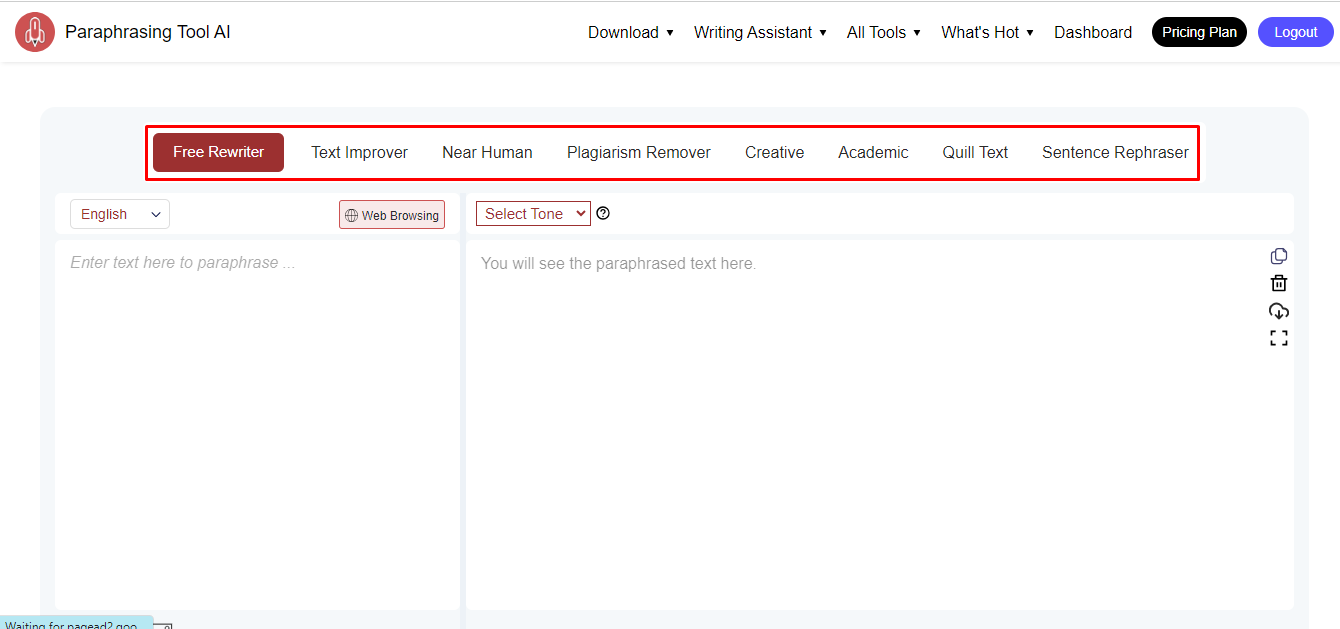
With the different paraphrasing modes available for the writers, they will have an opportunity to write the same piece of content differently.
Among the top AI rewriting tools available, Paraphrasingtool.ai features the maximum rewriting modes as shown in the figure below:
It provokes creativity and versatility in writers. It can ensure that they will have different sentence structures, word choices, and phrasing options with AI tools.
Improving Content Quality:
AI empowers writers to enhance the quality of their content by offering valuable insights and recommendations.
These tools analyze the context, purpose, and tone of the target audience. In return, it provides suggestions to refine the structure, clarity, coherence, and overall effectiveness of the writing.
Shortening and Simplifying Complex Sentences:
AI tools help writers streamline their writing by identifying and simplifying complex sentence structures.
They are trained to shorten convoluted sentences into concise and easily digestible components.
It helps writers to enhance readability, ensuring that their ideas are effectively communicated and understood.
Finding Mistakes & Inconsistencies in Your Content:
AI assists in meticulously scanning written content, identifying errors and inconsistencies.
For any grammatical mistakes or factual inaccuracies in formatting or tone, AI paraphrasing tools help writers maintain accuracy in their work.
Rewriting tools foster a habit of critical self-review and error detection. Instant feedback and suggestions for improvement encourage writers to carefully review their work.
This iterative process cultivates a keen eye for detail and a commitment to producing high-quality content.
Quick Rewriting of Already Written Content:
AI streamlines the process of rewriting content by providing alternative suggestions and phrasing options.
It enables writers to effortlessly rework their content, making it more engaging, coherent, and impactful, all while saving time and effort.
Eliminates Writer’s Block:
When faced with a creative slump or a mental hurdle, an AI writing tool provides a source of inspiration.
It generates writing prompts or suggesting topic ideas based on popular trends or user preferences.
Additionally, the tool’s ability to offer stylistic recommendations helps writers break free from the constraints of their current writing patterns.
Unparallel writing assistance provided by AI rewriting tools cannot be denied.
It is up to the writers to learn how to get maximum benefits from an AI system.
According to the writing experts, the above-mentioned tips are the most effective for learning to write better.
Whether you are a beginner or a professional and want to opt for AI tools for writing, the above guide will make this journey easy for you.
You are welcome if you have any suggestions to add to this guide!
Article Contributed by Joyce Wilson of Teacher Spark
Student Loans 101:
Studying can be an expensive endeavor, leaving many learners with the burden of student loan debt. Fortunately, there are ways to make it more affordable. Here are some strategies that college students can use to avoid costly student loans and keep their debt at a minimum, presented in the following article on English Online Training.
Set a Budget You Can Stick To
The first step in avoiding student loans is setting a budget you can stick to. Start by taking inventory of all your expenses, including tuition, rent, food, books, and any other costs associated with being a student. Once you have an idea of how much money you need each month for your various expenses, create a budget that allows you to live within your means. This will help ensure that you don’t overspend and end up relying on student loans to cover your costs.
Save with Online Coursework
Pursuing a degree online can be a financially savvy decision. Online courses, including those for getting a Bachelor of Education degree, are typically much less costly than their in-person counterparts. This is because you save on many of the expenses associated with traditional campus-based education, such as commuting costs, housing, and even textbooks, which are often available in digital format. Furthermore, online learning platforms often have lower tuition fees, making your educational journey more affordable.
Apply for Scholarships and Grants
Another way to reduce the cost of college is by applying for scholarships and grants. These funds are typically awarded based on financial need or academic merit, so be sure to do your research and apply for as many opportunities as possible. Also, consider asking family members for help if needed; they may be able to provide additional assistance with tuition or living expenses that could help reduce the amount of student loan debt you take on.
Find a Work-Study Program
Many colleges offer work-study programs where students can earn money while attending school. These programs allow students to work part-time jobs on campus in exchange for reduced tuition fees or other benefits such as housing assistance or meal plans.
Rent or Buy Used Textbooks
Textbooks are one of the biggest expenses associated with college life. However, buying used textbooks from online retailers or renting them from the library can significantly reduce this cost over time. Additionally, many professors now offer digital versions of textbooks which may be cheaper than purchasing physical copies from bookstores or online retailers.
Pick Up A Trade First Before Going To College
It’s becoming increasingly common for individuals to consider pursuing a trade before heading off to college. By learning a trade, you can gain valuable skills and experience that will set you apart in your future career. For example, if you plan on becoming an engineer, it may be beneficial to learn to weld as it provides hands-on experience with metalworking and fabrication. Alternatively, if you’re interested in architecture or building, carpentry can be a valuable skill to have under your belt. Pick up some tools and skills by exploring videos, articles and online tutorials.
Learn Outside the Classroom
Utilizing tools and resources to learn outside the classroom can significantly enhance your college experience, especially when it comes to mastering complex subjects. For instance, if you’re learning coding, a site like Code Profs can be an invaluable resource. By using these additional resources, you not only reinforce the knowledge you gain in class but also develop practical skills that can give you a competitive edge in the job market. So, don’t limit your learning to the confines of the classroom; explore these platforms and make the most of your education.
Updating Your Resume with Free Online PDF Tools
As you acquire new skills and experiences, it’s important to keep your resume up-to-date. Free online tools and template resources can help you create a professional-looking document that highlights your achievements and qualifications. With just a few clicks, you can customize the layout, font, and color scheme to suit your personal style. When it comes to formatting your resume, go with a PDF maker for best results. A PDF file will ensure that anyone who needs to view your resume can access it.
Keep Your College Finances Under Control
College doesn’t have to be expensive if students use smart strategies such as setting budgets they can stick to, picking up trades first before going off into college, and updating their resumes using free online tools. Doing so will not only save thousands of dollars but also provide invaluable experiences which will come in handy post graduation day.
For lessons to help you learn and improve your learning skills in English, visit English Online Training today!
Conditional sentences, also known as “if-then” sentences, express a relationship between a condition and its result. They usually consist of two clauses: the “if” clause (conditional clause) and the “main” clause (result clause). The “if” clause sets the condition, and the “main” clause presents the consequence or result of that condition.
Conditional sentences are a fundamental aspect of the English language. They serve to express hypothetical situations, possibilities, or cause-and-effect relationships. By using conditional clauses, we can explore different scenarios and their potential outcomes.
Understanding and using conditional sentences correctly can greatly enhance your ability to express different shades of meaning and convey complex ideas in English. So, remember to consider the specific conditions and their corresponding results when constructing conditional sentences.
There are several types of conditional sentences:
Zero Conditional:
This type of conditional sentence expresses general truths or facts, where the result is always true if the condition is fulfilled. It is formed using the simple present tense in both clauses. Example: If you heat water to 100 degrees Celsius, it boils.
First Conditional:
The first conditional is used for real and possible situations in the future. It is formed using the simple present tense in the “if” clause and will/can/may + base verb in the “main” clause. Example: If it rains tomorrow, we will stay indoors.
Second Conditional:
The second conditional deals with hypothetical or unlikely situations in the present or future. It is formed using the simple past tense in the “if” clause and would/could/might + base verb in the “main” clause. Example: If I had more money, I would buy a new car.
Third Conditional:
The third conditional expresses unreal situations in the past and their imagined consequences. It is formed using the past perfect tense in the “if” clause and would/could/might + have + past participle in the “main” clause. Example: If she had studied harder, she might have passed the exam.
Mixed Conditional:
Mixed conditionals combine elements of the second and third conditionals. They describe situations where the condition relates to the past, but the result relates to the present or vice versa. Example: If I had saved more money in the past, I would be wealthier now.
Test your grammar skills
ex 1. Zero conditional
(fill in the blank with the correct verb, in the correct form)
come flood boil get evacuate freeze fall dissolves grow fizz
If you heat water to 100 degrees Celsius, it ________________.
If the temperature drops below zero, water ________________.
If plants receive enough sunlight, they ________________.
If you mix red and yellow, you ________________orange.
If you press the switch, the light ________________on.
If the alarm rings, students ________________.
If you add salt to water, it ________________.
If it rains heavily, the streets ________________.
If you drop a ball, it ________________.
If you mix vinegar and baking soda, it ________________.
Test your grammar skills
ex 2. First conditional
(fill in the blank with the correct verb, in the correct form)
If you study hard, you ________________ the exam with flying colors. (pass)
We will go for a walk if it ________________ outside. (not/rain)
If she finishes her project on time, her boss ________________ her efforts. (appreciate)
I will call you if I ________________ any updates on the situation. (get)
If they don’t hurry, they ________________ the last bus home. (miss)
If you save enough money, you ________________ a new car. (buy)
If it snows tomorrow, schools ________________ closed. (be)
She won’t be late if she ________________ a taxi to the airport. (take)
If you eat healthy food, you ________________ better. (feel)
If you don’t finish the report in time, your manager ________________ disappointed. (be)
Test your grammar skills
ex 3. Second conditional
(fill in the blank with the correct verb, in the correct form)
If I were you, I ________________ for that job opportunity. (apply)
If she had more time, she ________________ a trip around the world. (take)
I would be surprised if he ________________ to the party. (come)
If they won the lottery, they ________________ a new house. (buy)
If it weren’t so expensive, I ________________ that designer dress. (buy)
She would feel better if she ________________ some rest. (get)
If he were taller, he ________________ a basketball player. (be)
If we had more resources, we ________________ a bigger project. (start)
If you were more careful, you ________________ mistakes. (make)
If I had a map, I ________________ lost. (not/get)
Test your grammar skills
ex 4. Third conditional
(fill in the blank with the correct verb, in the correct form)
If she had studied harder, she ____ the exam. (pass)
If they had taken the earlier flight, they ____ in time for the meeting. (arrive)
He wouldn’t have missed the train if he ____ his alarm. (set)
If we had known about the traffic jam, we ____ a different route. (take)
She wouldn’t have been late if she ____ up earlier. (get)
If they had practiced more, they ____ the competition. (win)
He would have understood the instructions if he ____ them carefully. (read)
If I had known about the party, I ____ it. (attend)
If she hadn’t missed her flight, she ____ at the conference. (speak)
If they had studied Spanish, they ____ the language. (learn)
Test your grammar skills
ex 5. Mixed conditional
(fill in the blank with the correct verb, in the correct form)
If I had more experience, I ________________ for that job. (apply)
If she understood the instructions, she ________________ mistakes. (not/make)
He would feel happier if he ________________ more time with his family. (spend)
If we had saved enough money, we ________________ on a vacation. (go)
If they had seen the movie, they ________________ how it ends. (know)
She would be healthier if she ________________ better eating habits. (have)
If he were more organized, he ________________ all his tasks on time. (complete)
If we had known about the event, we ________________ it. (attend)
She wouldn’t be stressed if she ________________ some time off. (take)
If they had made better decisions, they ________________ the consequences. (avoid)
Test your grammar skills
ex 6. Conditional sentences
(fill in the blank with the correct verb, in the correct form)
If you bring the ingredients, I ________________ the cake for the party. (bake)
We would have arrived on time if we ________________ the shortcut. (take)
If he were here, he ________________ you exactly what to do. (tell)
If they find the address, they ________________ the party location. (inform)
If I had known about the meeting, I ________________ my schedule accordingly. (arrange)
If you water the plants regularly, they ________________ healthy and vibrant. (remain)
If she could play the guitar, she ________________ us a song. (perform)
If you had called earlier, I ________________ my plans. (change)
Would you mind if I ________________ a look at your notes? (take)
If the weather were better, we ________________ for a hike in the mountains. (go)
Test your Business English grammar skills
ex. 7 Conditional sentences
(fill in the blank with the correct verb, in the correct form)
Be Increase Sign Improve Choose Make Reward Be Cut Adjust
If we deliver the project on time, the client ________________ satisfied.
If the marketing campaign is successful, sales ________________.
If the team meets its targets, the company ________________ them.
If we invest in employee training, productivity ________________.
If we offer competitive prices, customers ________________us.
If the negotiation goes well, we ________________the contract.
If the market conditions change, we ________________our strategy.
If we implement cost-saving measures, the company ________________ expenses.
If the team collaborates effectively, the project ________________ successful.
If we analyze the data thoroughly, we ________________ informed decisions.
Test your Advanced Business English grammar
ex 8. Conditional sentences
(fill in the blank with the correct verb, in the correct form)
If the company fails to meet regulatory requirements, we ________________ serious penalties.
Should the merger proceed as planned, we ________________ a dominant market position.
If the sales team surpasses its targets, they ________________ lucrative bonuses.
Should the market conditions remain stable, we ________________ substantial growth.
If the project encounters delays, we ________________ our contingency plan.
If the negotiations collapse, we ________________ the deal altogether.
Should the economy experience a downturn, we ________________ cost-saving measures.
If we secure the contract, we ________________ a long-term partnership.
If the company invests in research and development, we ________________ innovative solutions.
Should the market demand shift, we ________________ our product offerings accordingly.
In advanced Business English, using modal verbs in conditional sentences allows for more precise expressions of possibility, probability, and necessity in various business scenarios.
Conditional sentences using advanced Business English verbs:
ex 10. Advanced conditionals
(fill in the blank with the correct verb, in the correct form)
Are you struggling with speaking English confidently? Would you like to improve your language skills and boost your career opportunities? Look no further than spoken English coaching. This type of coaching focuses on helping individuals speak English fluently and effectively. Through personalized lessons and practice, you can enhance your pronunciation, intonation, grammar, and vocabulary. Whether you’re a non-native English speaker, a business professional, or a student, spoken English coaching can provide you with the skills you need to succeed in a global economy. Invest in your language fluency today and unlock new doors for your future.
Mastering Language Skills with Expert Guidance
In today’s globalized world, effective communication in English has become essential for personal, academic, and professional success. However, not everyone possesses the confidence and fluency required to express themselves fluently in spoken English. This is where spoken English coaching comes into the picture. In this blog post, we will explore what spoken English coaching is, its significance, and how it can help individuals enhance their language skills.
Understanding Spoken English Coaching
Spoken English coaching refers to a structured and personalized training program aimed at improving an individual’s spoken English proficiency. It involves expert guidance from experienced language trainers who assist learners in developing fluency, vocabulary, pronunciation, and overall communication skills in English.
The Significance of Spoken English Coaching
Overcoming Language Barriers:
For non-native English speakers, language barriers can hinder effective communication and limit opportunities. Spoken English coaching provides learners with the necessary tools and techniques to overcome these barriers, enabling them to express themselves confidently and articulately.
Boosting Confidence:
Lack of confidence often prevents individuals from expressing their thoughts and ideas in English. Spoken English coaching focuses on building confidence through constant practice, constructive feedback, and interactive sessions. As learners gain confidence, they become more comfortable using English as a means of communication.
Enhancing Pronunciation and Fluency:
Clear pronunciation and fluent speech are crucial aspects of effective communication. Spoken English coaching emphasizes improving pronunciation, intonation, and rhythm to ensure learners’ speech is easily understood by native English speakers. Through regular practice and drills, learners develop a natural flow and rhythm in their spoken English.
Expanding Vocabulary:
A robust vocabulary is essential for expressing ideas precisely and effectively. Spoken English coaching introduces learners to new words, idioms, and phrases, expanding their vocabulary repertoire. Trainers provide guidance on word usage, context, and collocations, enabling learners to express themselves more precisely and eloquently.
How Spoken English Coaching Works
Initial Assessment:
Spoken English coaching begins with an initial assessment to gauge the learner’s current proficiency level. Trainers evaluate the learner’s strengths, weaknesses, and specific language goals. This assessment helps design a personalized coaching plan tailored to the individual’s needs.
Structured Curriculum:
Spoken English coaching programs follow a structured curriculum that covers various aspects of language learning, such as grammar, vocabulary, pronunciation, listening comprehension, and conversational skills. The curriculum is designed to gradually progress from basic to advanced levels, ensuring a comprehensive learning experience.
Interactive Sessions:
Spoken English coaching involves interactive sessions where learners actively participate in discussions, debates, role-plays, and presentations. These sessions provide practical exposure to real-life scenarios, enabling learners to apply their language skills in a supportive environment. Trainers facilitate these sessions, offering guidance, correcting errors, and providing constructive feedback.
Practice and Feedback:
Regular practice is essential for mastering any language skill. Spoken English coaching incorporates ample opportunities for learners to practice speaking through exercises, drills, and conversations. Trainers provide timely feedback, focusing on areas for improvement and offering strategies to overcome specific challenges.
Continuous Assessment:
Throughout the coaching program, learners are continually assessed to monitor their progress. Trainers track improvements in fluency, pronunciation, vocabulary usage, and overall communication skills. This continuous assessment helps identify areas that require further attention, allowing trainers to adapt the coaching plan accordingly.
Benefits of Spoken English Coaching
Enhanced Communication Skills:
Spoken English coaching equips learners with the necessary skills to communicate effectively in various settings. Improved fluency, pronunciation, and vocabulary enable learners to express their thoughts and ideas with clarity, making them more confident communicators.
Increased Career Opportunities:
Proficiency in spoken English opens up a world of career opportunities. Many industries require employees to have excellent English communication skills. By investing in spoken English coaching, individuals can enhance their chances of securing better job prospects, promotions, and global career opportunities.
Cultural Integration:
English is often considered the lingua franca of the world. Spoken English coaching helps individuals bridge cultural gaps by enabling them to communicate effectively with people from diverse backgrounds. It fosters cultural integration, allowing individuals to connect with others, build relationships, and expand their global network.
Personal Growth:
Improving spoken English skills through coaching goes beyond professional benefits. It also contributes to personal growth and development. Enhanced communication abilities empower individuals to express themselves more confidently, engage in meaningful conversations, and participate actively in social and professional settings.
Choosing the Right Spoken English Coaching Program
Qualified and Experienced Trainers:
When selecting a spoken English coaching program, it is crucial to ensure that the trainers are qualified and experienced in teaching English as a second language. Look for trainers who possess the necessary certifications and have a proven track record of helping learners improve their spoken English skills.
Customization and Personalization:
Every learner has unique requirements and goals. Look for coaching programs that offer personalized learning plans tailored to individual needs. A good coaching program should assess the learner’s strengths and weaknesses and design a curriculum that addresses specific areas of improvement.
Practice and Interactive Sessions:
Effective spoken English coaching involves ample opportunities for practice and interactive sessions. Look for programs that offer regular speaking exercises, group discussions, and simulated real-life scenarios. This ensures practical application of language skills and boosts confidence in using English in day-to-day situations.
Feedback and Assessment:
Feedback plays a crucial role in language learning. Choose a coaching program that provides regular feedback and assessments to track progress and identify areas for improvement. Constructive feedback helps learners understand their strengths and weaknesses and guides them towards continuous growth.
What do you think?
Spoken English coaching is a valuable resource for individuals looking to enhance their language skills and become proficient communicators in English. With the right guidance, practice, and personalized learning, individuals can overcome language barriers, boost their confidence, and open up a world of opportunities in both personal and professional spheres. By investing in spoken English coaching, individuals embark on a journey of self-improvement, cultural integration, and successful communication in today’s interconnected world.
Are you looking to excel in the world of commercial real estate? Then mastering English is a must! In order to conduct successful deals and negotiations with clients, landlords, tenants, and investors, fluency in English is key.
You need to be able to effectively and confidently communicate your ideas, proposals, and offers. Whether it’s presenting a property in a persuasive and informative manner, negotiating the terms of a lease agreement, or writing a convincing email, strong English skills can make all the difference.
But it’s not just about language proficiency. The commercial real estate industry has its own vocabulary and jargon that you need to know in order to navigate it effectively. Terms like cap rate, NOI, and LOI are commonly used in the industry and can be confusing to those unfamiliar with them.
Therefore, taking an English for Commercial Real Estate course can be instrumental in advancing your career. Not only will it improve your language skills, but it will also help you develop a deeper understanding of industry terminology and practices.
With the right language skills and knowledge, you can gain a competitive edge in the commercial real estate industry and achieve your professional goals. So why wait? Start improving your English for Commercial Real Estate today!
a cityscape of berlin including the tv tower, in a cartoon style
What is commercial real estate?
Commercial real estate refers to properties that are used for business purposes, such as office buildings, retail spaces, warehouses, and industrial buildings. Unlike residential real estate, commercial real estate is purchased for the purpose of generating income, either through rental income or through the resale of the property at a higher price.
Commercial real estate is a large and complex industry that plays a crucial role in the economy. In this blog, we’ll take a closer look at what commercial real estate is, how it works, and the factors that influence its value.
Types of Commercial Real Estate
There are several types of commercial real estate, each with its own unique characteristics and investment potential.
Office Buildings:
These are the most common type of commercial real estate. They range in size from small buildings with a few tenants to large, high-rise buildings with hundreds of tenants. Office buildings are usually located in central business districts or in suburban areas with easy access to major highways and transportation.
Retail Spaces:
These are properties that are used for retail purposes, such as stores, malls, and shopping centers. They are often located in high-traffic areas with a large amount of foot traffic.
Industrial Buildings:
These are properties that are used for manufacturing, warehousing, and distribution purposes. They are often located in industrial areas with easy access to major highways and transportation.
Multi-Family Buildings:
Multi-family buildings are properties that are used for residential purposes, such as apartments and condominiums. They are often located in urban areas and are popular with investors because of their steady rental income.
Investing in Commercial Real Estate
Investing in commercial real estate can be a lucrative way to generate income and build long-term wealth. However, it is important to understand the risks and challenges involved in this type of investment.
One of the biggest challenges of investing in commercial real estate is finding the right property at the right price. It is important to conduct thorough research and due diligence to ensure that a property is a good investment opportunity.
Another challenge is managing the property once it has been purchased. This involves finding and managing tenants, collecting rent, and maintaining the property. Many investors choose to work with a property management company to handle these tasks.
Sustainability in Commercial Real Estate
Sustainability is becoming an increasingly important consideration in the commercial real estate industry. With growing concerns about climate change and environmental sustainability, many investors are looking for ways to incorporate sustainable practices into their properties.
There are several ways that sustainability can be integrated into commercial real estate. One way is through the use of green building practices. Green buildings are designed to be energy-efficient and environmentally friendly, with features such as high-efficiency lighting, water-saving fixtures, and renewable energy sources.
Another way to incorporate sustainability into commercial real estate is through the use of sustainable materials and construction practices. This can include using recycled or reclaimed materials, using sustainable wood products, and incorporating sustainable design features such as green roofs or rainwater harvesting systems.
In addition to environmental sustainability, social sustainability is also becoming a growing concern in the commercial real estate industry. This includes factors such as tenant comfort and health, community engagement, and social equity. Many investors are looking for ways to create spaces that are not only environmentally sustainable but also socially sustainable, with a focus on creating spaces that promote well-being and community.
Investors who incorporate sustainability into their commercial real estate properties can benefit in several ways. For one, sustainable properties are often more attractive to tenants and can command higher rents. Additionally, sustainable properties may be eligible for tax incentives or other financial benefits that can help offset the costs of incorporating sustainable features.
Overall, sustainability is becoming an increasingly important consideration in the commercial real estate industry. Investors who are able to incorporate sustainable practices into their properties may be able to benefit from increased demand and higher rents, as well as contribute to a more sustainable and resilient future.
Commercial Real Estate in Berlin
Berlin is a rapidly growing city with a thriving commercial real estate market. With a population of over 3.7 million people and a strong economy, Berlin is home to a diverse range of commercial real estate properties, including office buildings, retail spaces, industrial buildings, and multi-family residential buildings.
One of the key drivers of the commercial real estate market in Berlin is the city’s thriving tech industry. Many international tech companies have established a presence in Berlin in recent years, attracted by the city’s vibrant startup culture and affordable real estate prices. As a result, demand for office space in Berlin has been strong, with vacancy rates remaining low and rents continuing to rise.
Another factor driving demand for commercial real estate in Berlin is the city’s growing tourism industry. Berlin is a popular destination for tourists from around the world, with millions of visitors coming to the city each year. This has led to a strong demand for retail and hospitality properties, as well as for multi-family residential properties that can be used as short-term rentals.
Despite the strong demand for commercial real estate in Berlin, there are also challenges to investing in the market. One challenge is the limited supply of available properties, particularly in prime locations such as the city center. This has led to intense competition among investors and rising property prices.
Another challenge is navigating the complex regulations and zoning requirements in Berlin. As with many European cities, there are strict regulations governing the use and development of commercial real estate properties in Berlin. Investors must be prepared to navigate these regulations in order to ensure compliance and maximize their returns.
Overall, the commercial real estate market in Berlin offers both opportunities and challenges for investors. With a strong economy and growing demand for properties, Berlin is a promising market for investors looking to capitalize on the city’s growth. However, investors must be prepared to navigate the complexities of the market and carefully evaluate potential investment opportunities to ensure a successful outcome.
Questions for English learners
What is commercial real estate, and what types of properties does it include?
How has the COVID-19 pandemic affected the commercial real estate market?
What are the benefits of investing in commercial real estate, and what are some of the risks and challenges involved?
What are some of the key factors that drive demand for commercial real estate in different markets?
How can sustainability be integrated into commercial real estate properties, and what are the potential benefits for investors who do so?
What are some of the unique characteristics of the commercial real estate market in Berlin, and what opportunities and challenges does it offer for investors?
Enrolling in a coaching program for spoken English can offer several benefits to individuals. These programs can be tailored to suit your specific needs and goals, and can help you in many ways, which we will look at here.
Improving Pronunciation
One common reason why people choose to enroll in coaching programs is to improve their pronunciation of English words and sounds. With the help of a coach, you can learn the nuances of the language and get feedback on your pronunciation.
Improving pronunciation is a crucial aspect of learning any language, and this is especially true for English. English is a language with many unique sounds and nuances, which can be difficult for non-native speakers to master. Even small differences in pronunciation can affect how well you are understood and can impact your confidence when speaking.
Enrolling in a spoken English coaching program is an excellent way to improve your pronunciation skills. A good coach can help you identify the areas where you are struggling and provide you with targeted instruction on how to improve. They can also give you feedback on your pronunciation and guide you on how to produce the correct sounds.
Improving your pronunciation skills can have a significant impact on your ability to communicate effectively in English. It can help you to be more easily understood by native speakers and make you feel more confident when speaking. Additionally, improving your pronunciation skills can also help you expand your vocabulary and improve your overall comprehension of the language.
Whether you are a beginner or an advanced learner, improving your pronunciation skills should be a top priority. With the help of a spoken English coaching program, you can achieve significant progress in a short amount of time and gain the confidence you need to communicate effectively in any situation.
Expanding Vocabulary
A coaching program can also help you learn new words and phrases, and teach you how to use them effectively in conversations. This can help you express yourself more clearly and confidently.
Expanding your vocabulary is a crucial part of becoming fluent in any language, and this is especially true for English, which has an extensive vocabulary. When you enroll in a coaching program, you’ll have the opportunity to learn new words and phrases that you may not have encountered in your everyday life. A good coach can help you understand the meaning of these words and how to use them correctly in conversations.
By expanding your vocabulary, you’ll be able to communicate your thoughts and ideas more clearly and effectively, which is essential for both personal and professional situations. In addition, having a wider vocabulary can help you understand English language media such as books, movies, and news articles, which can further improve your language skills.
A coaching program can also teach you how to use idiomatic expressions and phrasal verbs, which are common in everyday English conversations. Learning these expressions and verbs can help you sound more natural and fluent in your speech, which can lead to better communication and stronger connections with native English speakers.
Overall, expanding your vocabulary through a coaching program can help you become a more effective communicator and give you the confidence to express yourself more effectively in any situation.
Building Confidence
Learning a new language can be challenging, especially when it comes to speaking it fluently. Many people feel shy or nervous about speaking a foreign language, and this can hinder their ability to communicate effectively. A coaching program can help you overcome these obstacles and build your confidence in speaking English.
A good coach will provide a safe and supportive environment for you to practice your speaking skills. They can help you identify your strengths and weaknesses, and provide constructive feedback to help you improve. Regular practice sessions with your coach can also help you become more comfortable with speaking English in different contexts, such as in social settings or in the workplace.
As your confidence grows, you may find that you are more willing to engage in conversations in English and take more risks with your speaking. This can lead to a greater sense of satisfaction and fulfillment as you become more proficient in the language. With the help of a coaching program, you can build the confidence you need to communicate effectively in English and achieve your language goals.
Preparing for Exams
Preparing for exams such as TOEFL or IELTS can be a stressful and overwhelming experience, especially if you’re not confident in your spoken English skills. This is where a coaching program can come in handy. With a targeted approach, a coach can help you prepare for these exams by identifying your strengths and weaknesses and tailoring the instruction and practice to your specific needs.
A good coaching program will cover all aspects of the exams, from the format and structure to the types of questions you can expect. The program will also provide you with ample opportunities to practice your skills, including mock exams and feedback on your performance.
In addition, a coach can help you develop strategies to manage your time effectively during the exam and deal with stress and anxiety. By preparing thoroughly for these exams with the help of a coach, you can feel confident and ready to perform your best on test day.
Improving Professional Opportunities
In today’s globalized world, speaking fluent English is becoming increasingly important in many professional fields. Whether you’re in business, education, or healthcare, good communication skills are essential for success. By enrolling in a coaching program for spoken English, you can improve your ability to communicate effectively with clients, colleagues, and patients.
Not only can improved English skills help you perform better in your current job, but they can also open up new career opportunities. Many companies and organizations require employees to have strong English language skills, and being able to communicate effectively in English can give you a competitive edge in the job market.
Moreover, speaking fluent English can also help you build relationships with people from different countries and cultures. This can be especially important if you work in a multinational company or have clients from around the world.
A coaching program can provide you with the skills you need to succeed in your professional life. By improving your spoken English skills, you can become a more confident and effective communicator, which can ultimately lead to greater success and advancement in your career.
In conclusion, if you want to improve your spoken English skills and achieve your language goals, enrolling in a coaching program could be an effective solution. These programs can be customized to suit your needs and can help you become a more confident and effective communicator.
property manager working hard to look after buildings in a cartoon style
A quick guide on English and the property management industry
As a property manager, it is essential to have excellent communication skills, and it all starts with mastering the language of communication. English has become a universal language, and using it effectively in your line of work is crucial for success. Here are some tips on how to use English as a property manager.
Master the basics
It’s important to learn basic English rules such as sentence structure, tenses, and grammar. Having a good comprehension of these basics will make it easier for you to communicate effectively with anyone.
Keep it brief and concise
When speaking or writing in English, it’s important to keep your message brief and to the point. Long-winded communication can lead to confusion and misinterpretation. So, be clear and concise in your messages.
Learn property management terminology
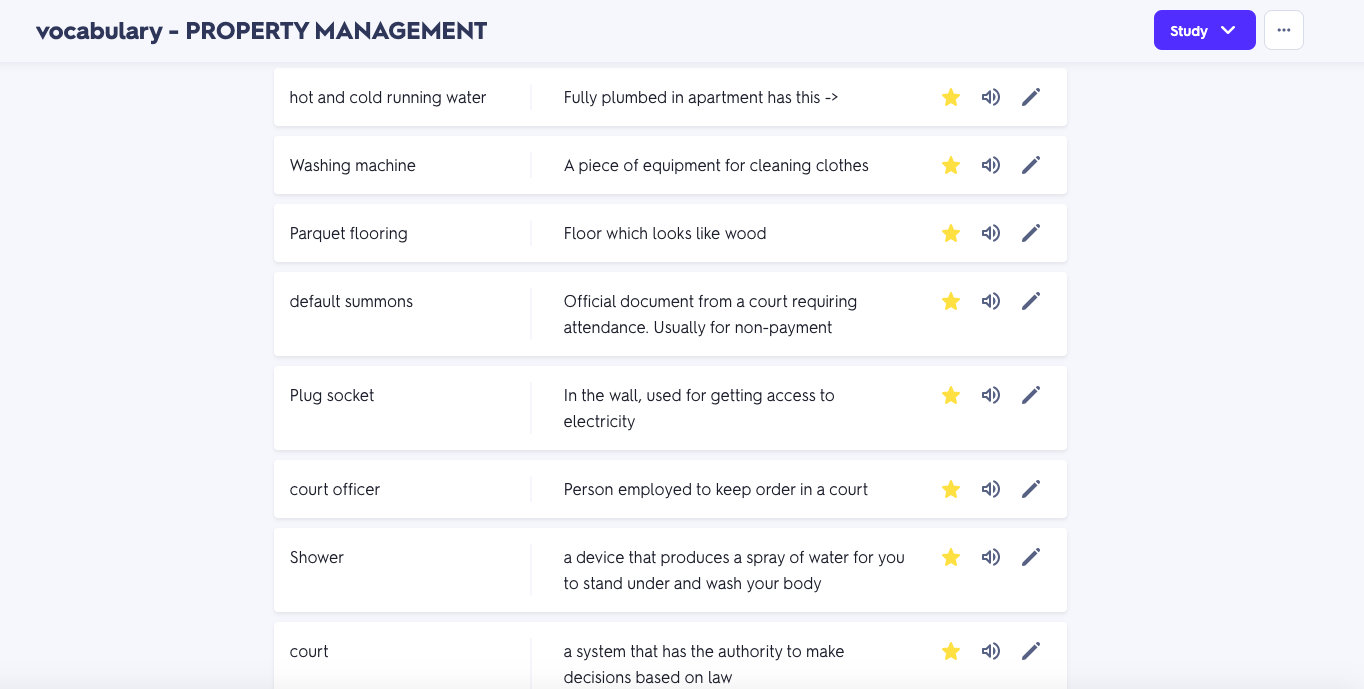
Property management has its terminology, and it’s essential to learn them. Understanding these terms will make communication easier between you and your clients, tenants, and other property management professionals. Follow the link if you want to practise
Download a pdf of property management vocabulary here
It’s crucial to understand the appropriate tone and language to use in different situations. For example, formal language is more appropriate when communicating with your clients or other professionals, whereas casual language is more suitable for communicating with your tenants.
Listen actively
Communication is a two-way street, and active listening is key. Listening carefully to your clients, tenants, and other professionals will help you understand their needs and suggest effective solutions.
Mastering English as a property manager will undoubtedly make you more effective in your line of work. So, take the time to learn and use these tips to communicate effectively with all involved parties in your property management career.
As you know, managing a property can be a complex task, and it requires a range of skills and knowledge to ensure success. From tenant relations to maintenance and repairs, property management involves a variety of responsibilities. Similarly, the construction industry is a challenging and dynamic field, requiring a range of skills and knowledge to complete a project successfully. In this blog post, we will explore various topics related to property management and the construction industry, including common challenges and best practices.
About Property Management
Property management involves overseeing a property’s day-to-day operations and ensuring that it remains profitable and well-maintained. Successful property management involves various aspects, including tenant relations, maintenance, and marketing. Here are some common challenges in property management and best practices to overcome them:
Maintenance: One of the most common challenges in property management is maintenance. Ensuring that a property is well-maintained is essential for attracting and retaining tenants. Regular inspections can help identify any maintenance or repair needs, and prompt action can help prevent more extensive damage. Responding promptly to maintenance requests is another critical aspect of successful property management.
Tenant Relations: Another essential aspect of property management is tenant relations. Building positive relationships with tenants can help improve tenant satisfaction and reduce the likelihood of disputes. Addressing tenant complaints and concerns promptly and professionally can help build trust and prevent potential conflicts.
Lease Agreements: Lease agreements are a critical aspect of property management. Lease agreements outline the terms and conditions of the tenant’s tenancy, including rent, security deposits, and lease terms. Consistent enforcement of lease terms and conditions is important to ensure that all tenants are treated fairly.
Tenant Screening: Screening potential tenants is another essential aspect of property management. Thoroughly screening potential tenants before approving their application can help ensure that they are a good fit for the property and reduce the likelihood of problems down the line.
Property Appraisal: Property appraisal is the process of evaluating a property’s value. Property appraisals are necessary for various reasons, including determining the rental rate for the property and marketing the property to prospective tenants.
Managing a property or overseeing a project requires a range of skills and knowledge. From tenant relations to project management, there are many challenges to overcome. However, by implementing best practices and prioritizing communication and transparency, property managers can ensure success.
Test your knowledge of the property management industry
By taking our quiz and stay updated on industry news by subscribing to our newsletter.
In addition, as an English speaker, you have an advantage in the property management industry, as English is the language of business worldwide. Being proficient in English will allow you to communicate effectively with a diverse range of clients, contractors, and stakeholders. Therefore, it’s wise to invest in English language courses or materials to enhance your communication abilities and increase your marketability as a property manager.
Processing…
Success! You're on the list.
Whoops! There was an error and we couldn't process your subscription. Please reload the page and try again.
In conclusion, property management is a complex and challenging field requiring a range of skills and knowledge. However, by implementing best practices, prioritizing communication and transparency, and investing in improving your English proficiency, you can ensure success and excel in your career as a property manager. Stay tuned for more blog posts on property management and the construction industry.












 Improve your English skills