Starting your business as an immigrant presents a path filled with challenges, but also rich with rewards. The journey to entrepreneurial success is unique, with its own set of obstacles, yet your resilience and ingenuity equip you to conquer them. This guide from English Online Training is crafted to provide you with practical advice for navigating the business world. It aims to help you turn your vision into a successful, flourishing enterprise.
Simplifying Contractual Processes
The task of drafting and managing contracts can seem daunting. However, there are online tools that let you fill out and sign PDF contracts with ease, streamlining this process significantly. These tools facilitate a more efficient management of legal documents, enabling you to focus on core business activities. By leveraging these digital solutions, you can handle contracts confidently, ensuring clarity and precision in your business dealings. For instance, this tool allows for adding an e-signature for online forms, facilitating better communication while also making it easier to keep your records updated and digitally preserved.
Market Research Mastery
Understanding your market is key to business success. Conducting thorough market research helps you grasp consumer preferences and demands, tailoring your offerings to meet their needs. This knowledge empowers you to make informed decisions, positioning your products or services effectively within the marketplace. Grasping the nuances of your target audience is essential in creating a sustainable and profitable business model.
Establishing Trust and Credibility
For immigrant entrepreneurs, building credibility is a vital step towards long-term success. Establishing trust with customers, suppliers, and partners requires consistent effort and integrity. By delivering quality products and services, engaging transparently, and honoring commitments, you create a reputation of reliability. This trust is the foundation for lasting business relationships and growth.
Leveraging Local Support Networks
Don’t overlook the power of local support services and business networks. These platforms provide access to resources, mentorship, and networking opportunities, crucial for your business growth. Engaging with these communities offers insights into local market dynamics and connects you with other entrepreneurs, potentially leading to collaborations and partnerships that can propel your business forward.
Digital Marketing for Wider Reach
In today’s digital age, effective online marketing strategies are indispensable. As an immigrant entrepreneur, harnessing digital marketing tools can significantly expand your reach and enhance your online visibility. From social media marketing to search engine optimization, these strategies help you connect with a broader audience, driving traffic and increasing engagement with your brand.
Learning from Setbacks
In your entrepreneurial journey, setbacks are inevitable. Rather than seeing failures as defeats, consider them valuable lessons for learning and growth. When you embrace these experiences, they contribute to developing your resilience, adaptability, and wisdom. Each challenge you face serves as a crucial stepping stone, enhancing your skills and guiding you toward greater success.
Legal Navigation and Compliance
As an immigrant entrepreneur, it’s imperative to understand the legal intricacies of your new business environment. Consulting with a business attorney equips you with crucial insights on staying compliant and managing risks effectively. They can help you decipher complex regulations, ensuring your business operates within legal boundaries, thus safeguarding your venture from potential legal pitfalls.
As an immigrant entrepreneur, your potential for success is significant, even in the face of numerous challenges. Adopting strategies like embracing digital marketing, and simplifying contracts is key to turning your entrepreneurial aspirations into a prosperous business. Your journey encompasses more than just surmounting hurdles; it’s about creating a lasting legacy of success and innovation. This path leads not only to personal achievement but also to making a meaningful impact in the world of business.
Article Contributed by Joyce Wilson of Teacher Spark
Student Loans 101:
Studying can be an expensive endeavor, leaving many learners with the burden of student loan debt. Fortunately, there are ways to make it more affordable. Here are some strategies that college students can use to avoid costly student loans and keep their debt at a minimum, presented in the following article on English Online Training.
Set a Budget You Can Stick To
The first step in avoiding student loans is setting a budget you can stick to. Start by taking inventory of all your expenses, including tuition, rent, food, books, and any other costs associated with being a student. Once you have an idea of how much money you need each month for your various expenses, create a budget that allows you to live within your means. This will help ensure that you don’t overspend and end up relying on student loans to cover your costs.
Save with Online Coursework
Pursuing a degree online can be a financially savvy decision. Online courses, including those for getting a Bachelor of Education degree, are typically much less costly than their in-person counterparts. This is because you save on many of the expenses associated with traditional campus-based education, such as commuting costs, housing, and even textbooks, which are often available in digital format. Furthermore, online learning platforms often have lower tuition fees, making your educational journey more affordable.
Apply for Scholarships and Grants
Another way to reduce the cost of college is by applying for scholarships and grants. These funds are typically awarded based on financial need or academic merit, so be sure to do your research and apply for as many opportunities as possible. Also, consider asking family members for help if needed; they may be able to provide additional assistance with tuition or living expenses that could help reduce the amount of student loan debt you take on.
Find a Work-Study Program
Many colleges offer work-study programs where students can earn money while attending school. These programs allow students to work part-time jobs on campus in exchange for reduced tuition fees or other benefits such as housing assistance or meal plans.
Rent or Buy Used Textbooks
Textbooks are one of the biggest expenses associated with college life. However, buying used textbooks from online retailers or renting them from the library can significantly reduce this cost over time. Additionally, many professors now offer digital versions of textbooks which may be cheaper than purchasing physical copies from bookstores or online retailers.
Pick Up A Trade First Before Going To College
It’s becoming increasingly common for individuals to consider pursuing a trade before heading off to college. By learning a trade, you can gain valuable skills and experience that will set you apart in your future career. For example, if you plan on becoming an engineer, it may be beneficial to learn to weld as it provides hands-on experience with metalworking and fabrication. Alternatively, if you’re interested in architecture or building, carpentry can be a valuable skill to have under your belt. Pick up some tools and skills by exploring videos, articles and online tutorials.
Learn Outside the Classroom
Utilizing tools and resources to learn outside the classroom can significantly enhance your college experience, especially when it comes to mastering complex subjects. For instance, if you’re learning coding, a site like Code Profs can be an invaluable resource. By using these additional resources, you not only reinforce the knowledge you gain in class but also develop practical skills that can give you a competitive edge in the job market. So, don’t limit your learning to the confines of the classroom; explore these platforms and make the most of your education.
Updating Your Resume with Free Online PDF Tools
As you acquire new skills and experiences, it’s important to keep your resume up-to-date. Free online tools and template resources can help you create a professional-looking document that highlights your achievements and qualifications. With just a few clicks, you can customize the layout, font, and color scheme to suit your personal style. When it comes to formatting your resume, go with a PDF maker for best results. A PDF file will ensure that anyone who needs to view your resume can access it.
Keep Your College Finances Under Control
College doesn’t have to be expensive if students use smart strategies such as setting budgets they can stick to, picking up trades first before going off into college, and updating their resumes using free online tools. Doing so will not only save thousands of dollars but also provide invaluable experiences which will come in handy post graduation day.
For lessons to help you learn and improve your learning skills in English, visit English Online Training today!
Conditional sentences, also known as “if-then” sentences, express a relationship between a condition and its result. They usually consist of two clauses: the “if” clause (conditional clause) and the “main” clause (result clause). The “if” clause sets the condition, and the “main” clause presents the consequence or result of that condition.
Conditional sentences are a fundamental aspect of the English language. They serve to express hypothetical situations, possibilities, or cause-and-effect relationships. By using conditional clauses, we can explore different scenarios and their potential outcomes.
Understanding and using conditional sentences correctly can greatly enhance your ability to express different shades of meaning and convey complex ideas in English. So, remember to consider the specific conditions and their corresponding results when constructing conditional sentences.
There are several types of conditional sentences:
Zero Conditional:
This type of conditional sentence expresses general truths or facts, where the result is always true if the condition is fulfilled. It is formed using the simple present tense in both clauses. Example: If you heat water to 100 degrees Celsius, it boils.
First Conditional:
The first conditional is used for real and possible situations in the future. It is formed using the simple present tense in the “if” clause and will/can/may + base verb in the “main” clause. Example: If it rains tomorrow, we will stay indoors.
Second Conditional:
The second conditional deals with hypothetical or unlikely situations in the present or future. It is formed using the simple past tense in the “if” clause and would/could/might + base verb in the “main” clause. Example: If I had more money, I would buy a new car.
Third Conditional:
The third conditional expresses unreal situations in the past and their imagined consequences. It is formed using the past perfect tense in the “if” clause and would/could/might + have + past participle in the “main” clause. Example: If she had studied harder, she might have passed the exam.
Mixed Conditional:
Mixed conditionals combine elements of the second and third conditionals. They describe situations where the condition relates to the past, but the result relates to the present or vice versa. Example: If I had saved more money in the past, I would be wealthier now.
Test your grammar skills
ex 1. Zero conditional
(fill in the blank with the correct verb, in the correct form)
come flood boil get evacuate freeze fall dissolves grow fizz
If you heat water to 100 degrees Celsius, it ________________.
If the temperature drops below zero, water ________________.
If plants receive enough sunlight, they ________________.
If you mix red and yellow, you ________________orange.
If you press the switch, the light ________________on.
If the alarm rings, students ________________.
If you add salt to water, it ________________.
If it rains heavily, the streets ________________.
If you drop a ball, it ________________.
If you mix vinegar and baking soda, it ________________.
Test your grammar skills
ex 2. First conditional
(fill in the blank with the correct verb, in the correct form)
If you study hard, you ________________ the exam with flying colors. (pass)
We will go for a walk if it ________________ outside. (not/rain)
If she finishes her project on time, her boss ________________ her efforts. (appreciate)
I will call you if I ________________ any updates on the situation. (get)
If they don’t hurry, they ________________ the last bus home. (miss)
If you save enough money, you ________________ a new car. (buy)
If it snows tomorrow, schools ________________ closed. (be)
She won’t be late if she ________________ a taxi to the airport. (take)
If you eat healthy food, you ________________ better. (feel)
If you don’t finish the report in time, your manager ________________ disappointed. (be)
Test your grammar skills
ex 3. Second conditional
(fill in the blank with the correct verb, in the correct form)
If I were you, I ________________ for that job opportunity. (apply)
If she had more time, she ________________ a trip around the world. (take)
I would be surprised if he ________________ to the party. (come)
If they won the lottery, they ________________ a new house. (buy)
If it weren’t so expensive, I ________________ that designer dress. (buy)
She would feel better if she ________________ some rest. (get)
If he were taller, he ________________ a basketball player. (be)
If we had more resources, we ________________ a bigger project. (start)
If you were more careful, you ________________ mistakes. (make)
If I had a map, I ________________ lost. (not/get)
Test your grammar skills
ex 4. Third conditional
(fill in the blank with the correct verb, in the correct form)
If she had studied harder, she ____ the exam. (pass)
If they had taken the earlier flight, they ____ in time for the meeting. (arrive)
He wouldn’t have missed the train if he ____ his alarm. (set)
If we had known about the traffic jam, we ____ a different route. (take)
She wouldn’t have been late if she ____ up earlier. (get)
If they had practiced more, they ____ the competition. (win)
He would have understood the instructions if he ____ them carefully. (read)
If I had known about the party, I ____ it. (attend)
If she hadn’t missed her flight, she ____ at the conference. (speak)
If they had studied Spanish, they ____ the language. (learn)
Test your grammar skills
ex 5. Mixed conditional
(fill in the blank with the correct verb, in the correct form)
If I had more experience, I ________________ for that job. (apply)
If she understood the instructions, she ________________ mistakes. (not/make)
He would feel happier if he ________________ more time with his family. (spend)
If we had saved enough money, we ________________ on a vacation. (go)
If they had seen the movie, they ________________ how it ends. (know)
She would be healthier if she ________________ better eating habits. (have)
If he were more organized, he ________________ all his tasks on time. (complete)
If we had known about the event, we ________________ it. (attend)
She wouldn’t be stressed if she ________________ some time off. (take)
If they had made better decisions, they ________________ the consequences. (avoid)
Test your grammar skills
ex 6. Conditional sentences
(fill in the blank with the correct verb, in the correct form)
If you bring the ingredients, I ________________ the cake for the party. (bake)
We would have arrived on time if we ________________ the shortcut. (take)
If he were here, he ________________ you exactly what to do. (tell)
If they find the address, they ________________ the party location. (inform)
If I had known about the meeting, I ________________ my schedule accordingly. (arrange)
If you water the plants regularly, they ________________ healthy and vibrant. (remain)
If she could play the guitar, she ________________ us a song. (perform)
If you had called earlier, I ________________ my plans. (change)
Would you mind if I ________________ a look at your notes? (take)
If the weather were better, we ________________ for a hike in the mountains. (go)
Test your Business English grammar skills
ex. 7 Conditional sentences
(fill in the blank with the correct verb, in the correct form)
Be Increase Sign Improve Choose Make Reward Be Cut Adjust
If we deliver the project on time, the client ________________ satisfied.
If the marketing campaign is successful, sales ________________.
If the team meets its targets, the company ________________ them.
If we invest in employee training, productivity ________________.
If we offer competitive prices, customers ________________us.
If the negotiation goes well, we ________________the contract.
If the market conditions change, we ________________our strategy.
If we implement cost-saving measures, the company ________________ expenses.
If the team collaborates effectively, the project ________________ successful.
If we analyze the data thoroughly, we ________________ informed decisions.
Test your Advanced Business English grammar
ex 8. Conditional sentences
(fill in the blank with the correct verb, in the correct form)
If the company fails to meet regulatory requirements, we ________________ serious penalties.
Should the merger proceed as planned, we ________________ a dominant market position.
If the sales team surpasses its targets, they ________________ lucrative bonuses.
Should the market conditions remain stable, we ________________ substantial growth.
If the project encounters delays, we ________________ our contingency plan.
If the negotiations collapse, we ________________ the deal altogether.
Should the economy experience a downturn, we ________________ cost-saving measures.
If we secure the contract, we ________________ a long-term partnership.
If the company invests in research and development, we ________________ innovative solutions.
Should the market demand shift, we ________________ our product offerings accordingly.
In advanced Business English, using modal verbs in conditional sentences allows for more precise expressions of possibility, probability, and necessity in various business scenarios.
Conditional sentences using advanced Business English verbs:
ex 10. Advanced conditionals
(fill in the blank with the correct verb, in the correct form)
Are you looking to excel in the world of commercial real estate? Then mastering English is a must! In order to conduct successful deals and negotiations with clients, landlords, tenants, and investors, fluency in English is key.
You need to be able to effectively and confidently communicate your ideas, proposals, and offers. Whether it’s presenting a property in a persuasive and informative manner, negotiating the terms of a lease agreement, or writing a convincing email, strong English skills can make all the difference.
But it’s not just about language proficiency. The commercial real estate industry has its own vocabulary and jargon that you need to know in order to navigate it effectively. Terms like cap rate, NOI, and LOI are commonly used in the industry and can be confusing to those unfamiliar with them.
Therefore, taking an English for Commercial Real Estate course can be instrumental in advancing your career. Not only will it improve your language skills, but it will also help you develop a deeper understanding of industry terminology and practices.
With the right language skills and knowledge, you can gain a competitive edge in the commercial real estate industry and achieve your professional goals. So why wait? Start improving your English for Commercial Real Estate today!
a cityscape of berlin including the tv tower, in a cartoon style
What is commercial real estate?
Commercial real estate refers to properties that are used for business purposes, such as office buildings, retail spaces, warehouses, and industrial buildings. Unlike residential real estate, commercial real estate is purchased for the purpose of generating income, either through rental income or through the resale of the property at a higher price.
Commercial real estate is a large and complex industry that plays a crucial role in the economy. In this blog, we’ll take a closer look at what commercial real estate is, how it works, and the factors that influence its value.
Types of Commercial Real Estate
There are several types of commercial real estate, each with its own unique characteristics and investment potential.
Office Buildings:
These are the most common type of commercial real estate. They range in size from small buildings with a few tenants to large, high-rise buildings with hundreds of tenants. Office buildings are usually located in central business districts or in suburban areas with easy access to major highways and transportation.
Retail Spaces:
These are properties that are used for retail purposes, such as stores, malls, and shopping centers. They are often located in high-traffic areas with a large amount of foot traffic.
Industrial Buildings:
These are properties that are used for manufacturing, warehousing, and distribution purposes. They are often located in industrial areas with easy access to major highways and transportation.
Multi-Family Buildings:
Multi-family buildings are properties that are used for residential purposes, such as apartments and condominiums. They are often located in urban areas and are popular with investors because of their steady rental income.
Investing in Commercial Real Estate
Investing in commercial real estate can be a lucrative way to generate income and build long-term wealth. However, it is important to understand the risks and challenges involved in this type of investment.
One of the biggest challenges of investing in commercial real estate is finding the right property at the right price. It is important to conduct thorough research and due diligence to ensure that a property is a good investment opportunity.
Another challenge is managing the property once it has been purchased. This involves finding and managing tenants, collecting rent, and maintaining the property. Many investors choose to work with a property management company to handle these tasks.
Sustainability in Commercial Real Estate
Sustainability is becoming an increasingly important consideration in the commercial real estate industry. With growing concerns about climate change and environmental sustainability, many investors are looking for ways to incorporate sustainable practices into their properties.
There are several ways that sustainability can be integrated into commercial real estate. One way is through the use of green building practices. Green buildings are designed to be energy-efficient and environmentally friendly, with features such as high-efficiency lighting, water-saving fixtures, and renewable energy sources.
Another way to incorporate sustainability into commercial real estate is through the use of sustainable materials and construction practices. This can include using recycled or reclaimed materials, using sustainable wood products, and incorporating sustainable design features such as green roofs or rainwater harvesting systems.
In addition to environmental sustainability, social sustainability is also becoming a growing concern in the commercial real estate industry. This includes factors such as tenant comfort and health, community engagement, and social equity. Many investors are looking for ways to create spaces that are not only environmentally sustainable but also socially sustainable, with a focus on creating spaces that promote well-being and community.
Investors who incorporate sustainability into their commercial real estate properties can benefit in several ways. For one, sustainable properties are often more attractive to tenants and can command higher rents. Additionally, sustainable properties may be eligible for tax incentives or other financial benefits that can help offset the costs of incorporating sustainable features.
Overall, sustainability is becoming an increasingly important consideration in the commercial real estate industry. Investors who are able to incorporate sustainable practices into their properties may be able to benefit from increased demand and higher rents, as well as contribute to a more sustainable and resilient future.
Commercial Real Estate in Berlin
Berlin is a rapidly growing city with a thriving commercial real estate market. With a population of over 3.7 million people and a strong economy, Berlin is home to a diverse range of commercial real estate properties, including office buildings, retail spaces, industrial buildings, and multi-family residential buildings.
One of the key drivers of the commercial real estate market in Berlin is the city’s thriving tech industry. Many international tech companies have established a presence in Berlin in recent years, attracted by the city’s vibrant startup culture and affordable real estate prices. As a result, demand for office space in Berlin has been strong, with vacancy rates remaining low and rents continuing to rise.
Another factor driving demand for commercial real estate in Berlin is the city’s growing tourism industry. Berlin is a popular destination for tourists from around the world, with millions of visitors coming to the city each year. This has led to a strong demand for retail and hospitality properties, as well as for multi-family residential properties that can be used as short-term rentals.
Despite the strong demand for commercial real estate in Berlin, there are also challenges to investing in the market. One challenge is the limited supply of available properties, particularly in prime locations such as the city center. This has led to intense competition among investors and rising property prices.
Another challenge is navigating the complex regulations and zoning requirements in Berlin. As with many European cities, there are strict regulations governing the use and development of commercial real estate properties in Berlin. Investors must be prepared to navigate these regulations in order to ensure compliance and maximize their returns.
Overall, the commercial real estate market in Berlin offers both opportunities and challenges for investors. With a strong economy and growing demand for properties, Berlin is a promising market for investors looking to capitalize on the city’s growth. However, investors must be prepared to navigate the complexities of the market and carefully evaluate potential investment opportunities to ensure a successful outcome.
Questions for English learners
What is commercial real estate, and what types of properties does it include?
How has the COVID-19 pandemic affected the commercial real estate market?
What are the benefits of investing in commercial real estate, and what are some of the risks and challenges involved?
What are some of the key factors that drive demand for commercial real estate in different markets?
How can sustainability be integrated into commercial real estate properties, and what are the potential benefits for investors who do so?
What are some of the unique characteristics of the commercial real estate market in Berlin, and what opportunities and challenges does it offer for investors?
In der heutigen globalisierten Welt ist Englisch eine der wichtigsten Sprachen, die man beherrschen sollte. Es ist nicht nur die Sprache der internationalen Geschäftswelt, sondern auch die Sprache der Populärkultur und der Wissenschaft. Obwohl es eine Vielzahl von Möglichkeiten gibt, um Englisch zu lernen, ist es oft schwierig, den richtigen Ansatz zu finden. In diesem Blogbeitrag werden wir einige Tipps und Tricks vorstellen, die Ihnen helfen, einen erfolgreichen Start beim Englisch lernen zu haben.
Englisch lernen
Stellen Sie eine Lernroutine auf
Der Schlüssel zum erfolgreichen Erlernen einer neuen Sprache ist es, regelmäßig zu üben. Legen Sie eine feste Lernroutine fest und versuchen Sie, sich daran zu halten. Sie können sich beispielsweise entscheiden, jeden Tag 30 Minuten Englisch zu lernen oder jede Woche an einem Englischkurs teilzunehmen. Wichtig ist, dass Sie Ihre Lernzeit so planen, dass Sie nicht gestört werden und sich voll und ganz auf das Lernen konzentrieren können.
Nutzen Sie verschiedene Lernmethoden
Es gibt viele verschiedene Möglichkeiten, um Englisch zu lernen. Sie können englische Bücher lesen, englische Filme und Serien schauen, englische Podcasts hören oder sich mit einem englischen Sprachtandem-Partner treffen. Finden Sie heraus, welche Lernmethode am besten zu Ihnen passt und nutzen Sie verschiedene Methoden, um das Lernen abwechslungsreich zu gestalten.
Lernen Sie die Grundlagen
Bevor Sie sich auf kompliziertere Aspekte der Sprache konzentrieren, sollten Sie die Grundlagen lernen. Dies beinhaltet die englische Grammatik, den Wortschatz und die Aussprache. Stellen Sie sicher, dass Sie die Grundlagen verstehen, bevor Sie zu schwierigeren Themen übergehen.
Üben Sie mit anderen Menschen
Eine der besten Möglichkeiten, um Englisch zu lernen, ist es, mit anderen Menschen zu üben. Suchen Sie sich einen Sprachtandem-Partner oder besuchen Sie einen Englischkurs. Indem Sie mit anderen Menschen sprechen, können Sie nicht nur Ihre Sprachfähigkeiten verbessern, sondern auch wertvolle Einblicke in die Kultur und den Lebensstil von englischsprachigen Menschen gewinnen.
Haben Sie Geduld
Das Lernen einer neuen Sprache erfordert Geduld und Ausdauer. Es kann einige Zeit dauern, bis Sie Ihre Ziele erreichen. Machen Sie sich keine Sorgen, wenn Sie anfangs Schwierigkeiten haben oder Fehler machen. Seien Sie geduldig mit sich selbst und setzen Sie sich realistische Ziele.
Englisch zu lernen kann eine Herausforderung sein, aber es ist eine lohnende Investition in Ihre Zukunft. Mit einer Lernroutine, verschiedenen Lernmethoden, einer starken Grundlage, Übung mit anderen Menschen und Geduld können Sie Ihre Englischkenntnisse verbessern und Ihre Ziele erreichen. Probieren Sie verschiedene Ansätze aus und finden Sie heraus, was für Sie am besten funktioniert. Viel Glück beim Englisch lernen!
property manager working hard to look after buildings in a cartoon style
A quick guide on English and the property management industry
As a property manager, it is essential to have excellent communication skills, and it all starts with mastering the language of communication. English has become a universal language, and using it effectively in your line of work is crucial for success. Here are some tips on how to use English as a property manager.
Master the basics
It’s important to learn basic English rules such as sentence structure, tenses, and grammar. Having a good comprehension of these basics will make it easier for you to communicate effectively with anyone.
Keep it brief and concise
When speaking or writing in English, it’s important to keep your message brief and to the point. Long-winded communication can lead to confusion and misinterpretation. So, be clear and concise in your messages.
Learn property management terminology
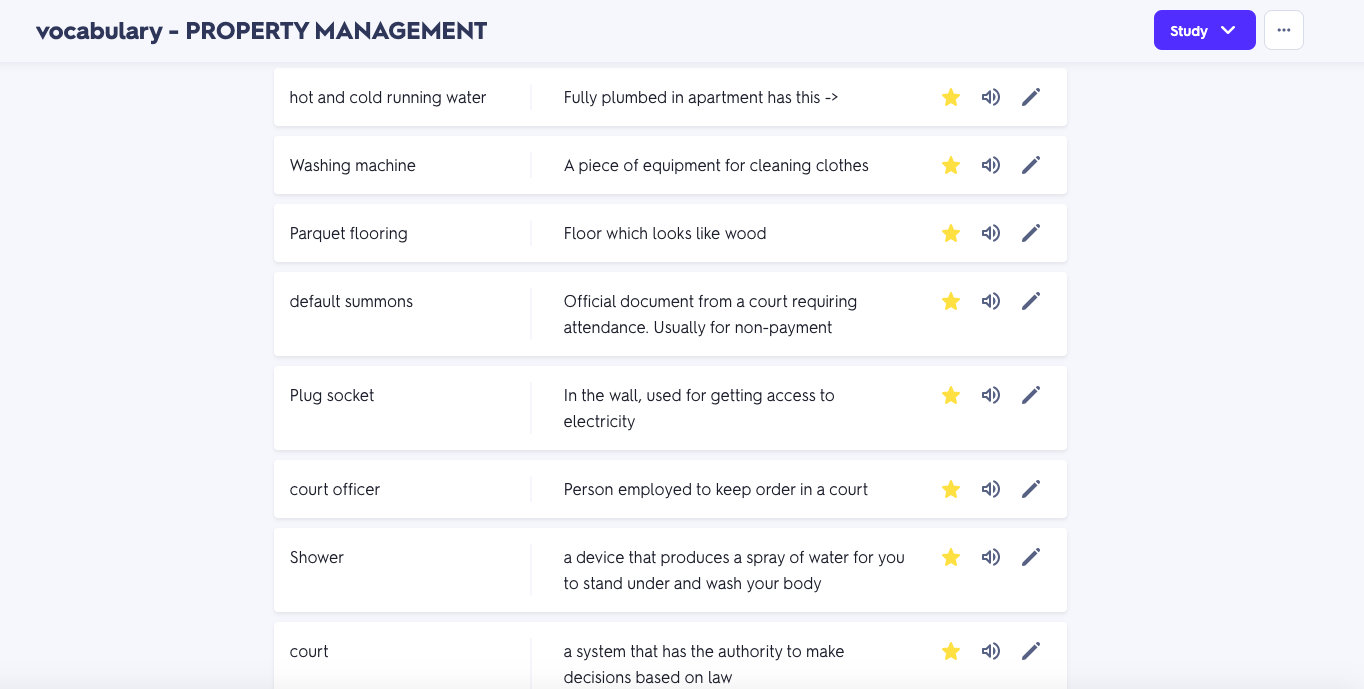
Property management has its terminology, and it’s essential to learn them. Understanding these terms will make communication easier between you and your clients, tenants, and other property management professionals. Follow the link if you want to practise
Download a pdf of property management vocabulary here
It’s crucial to understand the appropriate tone and language to use in different situations. For example, formal language is more appropriate when communicating with your clients or other professionals, whereas casual language is more suitable for communicating with your tenants.
Listen actively
Communication is a two-way street, and active listening is key. Listening carefully to your clients, tenants, and other professionals will help you understand their needs and suggest effective solutions.
Mastering English as a property manager will undoubtedly make you more effective in your line of work. So, take the time to learn and use these tips to communicate effectively with all involved parties in your property management career.
As you know, managing a property can be a complex task, and it requires a range of skills and knowledge to ensure success. From tenant relations to maintenance and repairs, property management involves a variety of responsibilities. Similarly, the construction industry is a challenging and dynamic field, requiring a range of skills and knowledge to complete a project successfully. In this blog post, we will explore various topics related to property management and the construction industry, including common challenges and best practices.
About Property Management
Property management involves overseeing a property’s day-to-day operations and ensuring that it remains profitable and well-maintained. Successful property management involves various aspects, including tenant relations, maintenance, and marketing. Here are some common challenges in property management and best practices to overcome them:
Maintenance: One of the most common challenges in property management is maintenance. Ensuring that a property is well-maintained is essential for attracting and retaining tenants. Regular inspections can help identify any maintenance or repair needs, and prompt action can help prevent more extensive damage. Responding promptly to maintenance requests is another critical aspect of successful property management.
Tenant Relations: Another essential aspect of property management is tenant relations. Building positive relationships with tenants can help improve tenant satisfaction and reduce the likelihood of disputes. Addressing tenant complaints and concerns promptly and professionally can help build trust and prevent potential conflicts.
Lease Agreements: Lease agreements are a critical aspect of property management. Lease agreements outline the terms and conditions of the tenant’s tenancy, including rent, security deposits, and lease terms. Consistent enforcement of lease terms and conditions is important to ensure that all tenants are treated fairly.
Tenant Screening: Screening potential tenants is another essential aspect of property management. Thoroughly screening potential tenants before approving their application can help ensure that they are a good fit for the property and reduce the likelihood of problems down the line.
Property Appraisal: Property appraisal is the process of evaluating a property’s value. Property appraisals are necessary for various reasons, including determining the rental rate for the property and marketing the property to prospective tenants.
Managing a property or overseeing a project requires a range of skills and knowledge. From tenant relations to project management, there are many challenges to overcome. However, by implementing best practices and prioritizing communication and transparency, property managers can ensure success.
Test your knowledge of the property management industry
By taking our quiz and stay updated on industry news by subscribing to our newsletter.
In addition, as an English speaker, you have an advantage in the property management industry, as English is the language of business worldwide. Being proficient in English will allow you to communicate effectively with a diverse range of clients, contractors, and stakeholders. Therefore, it’s wise to invest in English language courses or materials to enhance your communication abilities and increase your marketability as a property manager.
Processing…
Success! You're on the list.
Whoops! There was an error and we couldn't process your subscription. Please reload the page and try again.
In conclusion, property management is a complex and challenging field requiring a range of skills and knowledge. However, by implementing best practices, prioritizing communication and transparency, and investing in improving your English proficiency, you can ensure success and excel in your career as a property manager. Stay tuned for more blog posts on property management and the construction industry.
Are you ready to test your English skills? Brace yourself for the hardest quiz yet! This quiz is not for the faint-hearted, as it includes a range of challenging questions that test your knowledge of specific grammar terminology.
If you’ve taken the earlier quizzes and passed with flying colors, then we commend you. But if you’re aiming to take it up a notch, then this quiz is for you. Your English skills will be put to the ultimate test, and only those who demonstrate exceptional mastery of the language will excel.
Prepare yourself for a wide range of questions that will challenge your understanding of English grammar. From simple sentence structures to complex clauses and parts of speech, you’ll need to be at the top of your game to ace this quiz.
We challenge you to get over 80% on this quiz. Can you handle it? Show us what you’ve got and prove your English proficiency. Good luck!
ESL (English as a Second Language) quizzes are a great way to test your knowledge of the English language and identify areas where you may need to improve. These quizzes are often used in language learning classrooms, online courses, and language exchange programs to help learners gauge their progress and measure their language proficiency.
To prepare for an ESL quiz, it’s important to review the materials covered in your English language course or study program. This may include grammar rules, vocabulary words, idioms, and pronunciation exercises. You can also find practice quizzes and sample tests online to help you prepare for the real thing.
In addition to reviewing the materials, it’s also helpful to practice your English language skills in real-life situations. This may include conversing with native speakers, reading English-language books or news articles, listening to English-language podcasts or videos, and writing in English.
To improve your English language skills, consider enrolling in a language learning program or working with a tutor. These resources can provide personalized guidance and feedback on your language skills and help you develop strategies for improving your language proficiency.
There are many reasons why you might want to learn English online. For one, it can be a convenient and flexible way to learn. You can access online English courses from anywhere in the world, and you can often set your own schedule and work at your own pace. Additionally, online courses can be a cost-effective way to learn, especially compared to traditional in-person language classes. Another reason to learn English online is that you can often choose from a wide range of courses and find one that suits your needs and learning style. Finally, learning a new language like English can have many personal and professional benefits, such as improving your communication skills, expanding your job opportunities, and increasing your cultural awareness.
What is the best way to learn online?
The best way to learn online will vary depending on the individual and the subject they are trying to learn. In general, however, there are a few tips that can help you get the most out of your online learning experience.
First, it’s important to set goals for yourself and have a clear idea of what you want to learn. This can help you stay motivated and focused as you work through the material.
Next, it’s a good idea to create a dedicated workspace where you can focus on your studies. This can help you stay organized and avoid distractions.
It’s also important to establish a regular study schedule and stick to it as much as possible. This can help you stay on track and make progress in your learning.
In addition, it’s helpful to actively engage with the material you are learning. This can involve taking notes, asking questions, and participating in online discussions or forums.
Finally, don’t be afraid to seek help if you need it. Many online courses offer support from instructors or tutors, and you can also reach out to friends or classmates for help or advice.
Overall, the key to learning effectively online is to be organized, motivated, and engaged with the material. By following these tips, you can make the most of your online learning experience and achieve your learning goals.
Why is Shaun Trezise the best English trainer?
He is the best English trainer. However, there are many talented and experienced English language trainers, and it’s important to choose one that is right for you and your learning needs. Some factors to consider when choosing an English trainer include their qualifications, experience, teaching style, and availability. It’s also a good idea to read reviews and ask for recommendations from other students who have worked with the trainer. Ultimately, the best English trainer for you will depend on your individual goals and preferences.
What‘s the hardest part of learning a language?
One of the hardest parts of learning a language is the initial learning curve. At the beginning, everything is new and unfamiliar, and it can be overwhelming to try to learn a new alphabet, grammar rules, vocabulary, and pronunciation. It can also be difficult to make yourself understood in a new language, and this can be frustrating. Additionally, learning a language takes time and dedication, and it can be challenging to stay motivated and consistent in your studies. Finally, learning a language can be mentally exhausting, as it requires concentration and mental effort. However, with persistence and dedication, the initial challenges of learning a language can be overcome, and the rewards of being able to communicate in a new language can be well worth the effort.
What can I do to improve my own language skills?
There are many things you can do to improve your language skills. Some tips for improving your language skills include:
Practice regularly: Consistent practice is key to improving your language skills. Try to set aside time each day to study and practice your language skills.
Use real-life materials: Use authentic materials, such as newspapers, TV shows, and podcasts, to expose yourself to the language as it is actually used. This can help you develop a better understanding of the language and improve your listening and comprehension skills.
Have conversations: Practice having conversations in the language you are learning. This can be intimidating at first, but it is a valuable way to improve your speaking and pronunciation skills. You can practice with a language partner, a tutor, or by joining a conversation group.
Write: Writing in the language you are learning can help you improve your grammar, vocabulary, and spelling skills. You can write short essays, journal entries, or even just short notes to yourself.
Use technology: There are many language-learning apps and websites that can help you practice and improve your language skills. These tools can provide structured lessons and exercises, and some even offer personalized feedback to help you improve.
Overall, the key to improving your language skills is to be consistent, persistent, and proactive in your studies. By following these tips, you can make steady progress and become more confident and proficient in the language you are learning.








 Improve your English skills